
Why Mole Mapping Matters: A Simple Habit That Could Make a Big Difference
This exceptionally hot summer has been a timely reminder of the importance of looking after your skin. And that isn’t just about preventing sunburn (though it is important!). It's also about knowing your skin well enough to notice when something changes.
Most of us have moles, freckles, or birthmarks that we've had for years. While the vast majority are completely harmless, getting to know your skin can help you spot changes early. That's where mole mapping comes in.
Mole mapping is the process of regularly photographing and monitoring your moles over time. It isn't about diagnosing skin cancer yourself - it's about noticing changes that you can discuss with a healthcare professional. Early detection is one of the most important factors in the successful treatment of melanoma and other skin cancers.

Photo by Morgan Vander Hart on Unsplash
A good place to start is by becoming familiar with the ABCDE rule:
Asymmetry: one half doesn't match the other.
Border: the edges are irregular, blurred or uneven.
Colour: multiple shades or changes in colour.
Diameter: larger than around 6mm (although melanomas can be smaller).
Evolving: any mole that changes in size, shape, colour, or starts itching or bleeding should be checked by a healthcare professional.
The challenge is that it's surprisingly difficult to remember exactly what a mole looked like six months ago. A photo taken today can become an invaluable point of comparison in the future.
Keep Track of Changes - All in One Place
The Inherit app is a secure, patient-controlled personal health record designed to help you keep all of your important health information together. Alongside your medical records, medications and appointments, you can also build a visual history of changes to your skin by securely storing photos and notes over time.
If you notice a mole that you'd like to monitor, you can:
Add a photo and date it.
Record any changes you've noticed, such as itching, bleeding, or changes in appearance.
Keep all your observations in one secure place rather than searching through your phone's camera roll.
Bring this information with you to a GP or dermatologist appointment.
Having a visual timeline can make it easier to describe changes accurately and support more informed conversations with your healthcare team. Instead of relying on memory, you'll have a record you can refer back to whenever you need it.
Get to Know Your Skin
Checking your skin doesn't have to be time-consuming. Setting aside a few minutes every month to examine your skin - especially areas you don't often see, like your back, scalp, or the backs of your legs - can become part of your overall health routine.
It's important to remember that a photo isn't a diagnosis. If a mole is new, changing, painful, bleeding, or simply doesn't look right, arrange an assessment with your GP or a qualified healthcare professional as soon as possible.
By getting to know your skin and tracking changes over time, you're giving yourself and your healthcare providers the best possible information to make decisions when it matters most.
With Inherit your health record stays with you. Whether you're tracking changes to your skin, preparing for an appointment, or simply keeping your health information organised, you'll have everything you need in one secure place - helping you take a more informed and proactive role in your health.
Expert mapping
While many people can monitor a handful of moles themselves, that's not always practical. Inherit's CEO Phoebe Lee recently underwent professional full-body mole mapping after being referred by an NHS dermatologist.
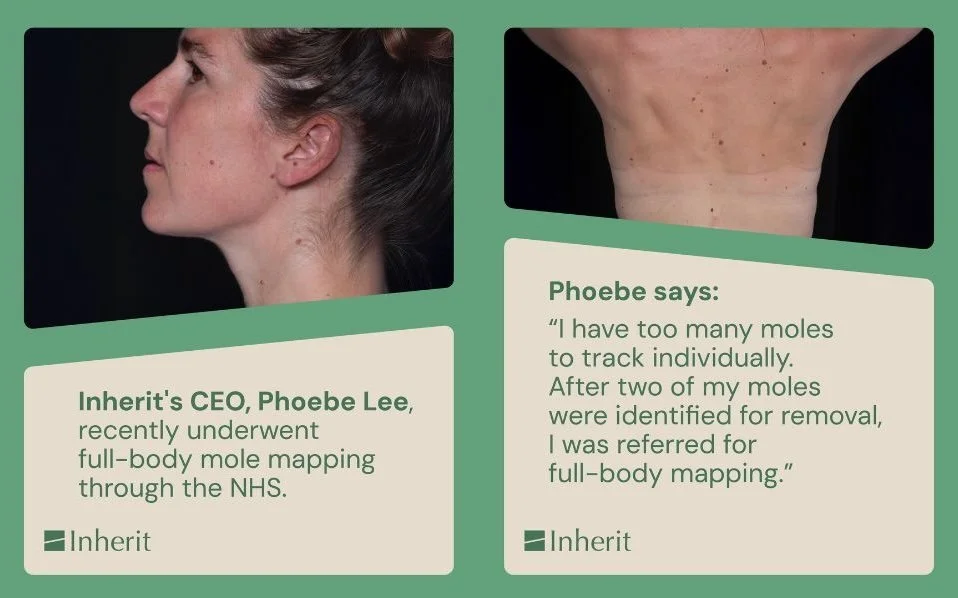
She says, “I have too many moles to track individually. After two of my moles were identified for removal, I was referred for full-body mapping. A specialist, with a chaperone present throughout, took high-quality photographs of my entire body including the soles of my feet and individual moles such as one on my eyebrow. I was then given a complete set of digital images to use as a baseline for future comparisons."
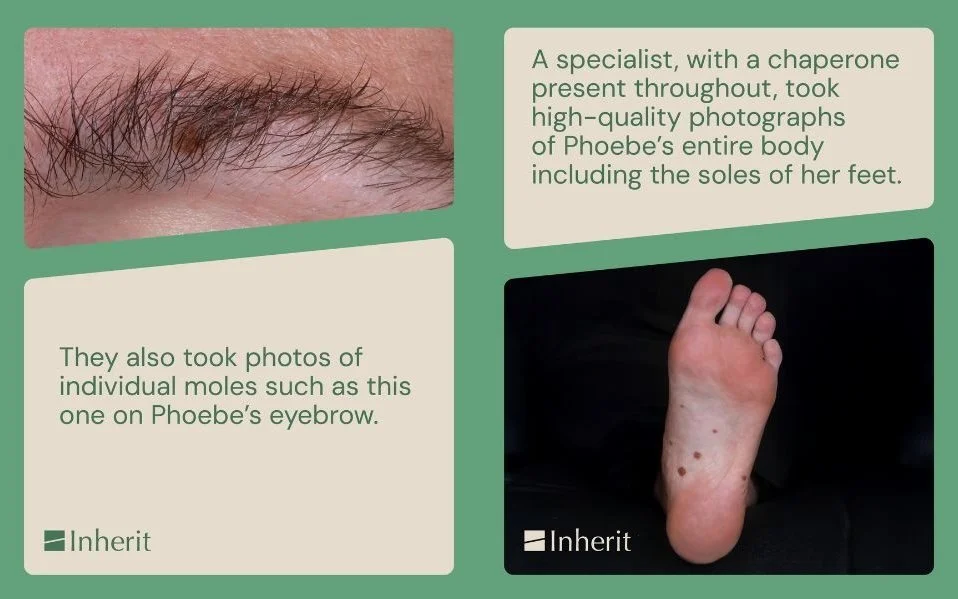
For people with a large number of moles, professional mole mapping provides an accurate record that can help clinicians monitor changes over time and, like Phoebe, you can store and date the images in your Inherit account.